Painting with Quantum Physics
by João S. Ferreira, Quantum Application Developer at MOTH


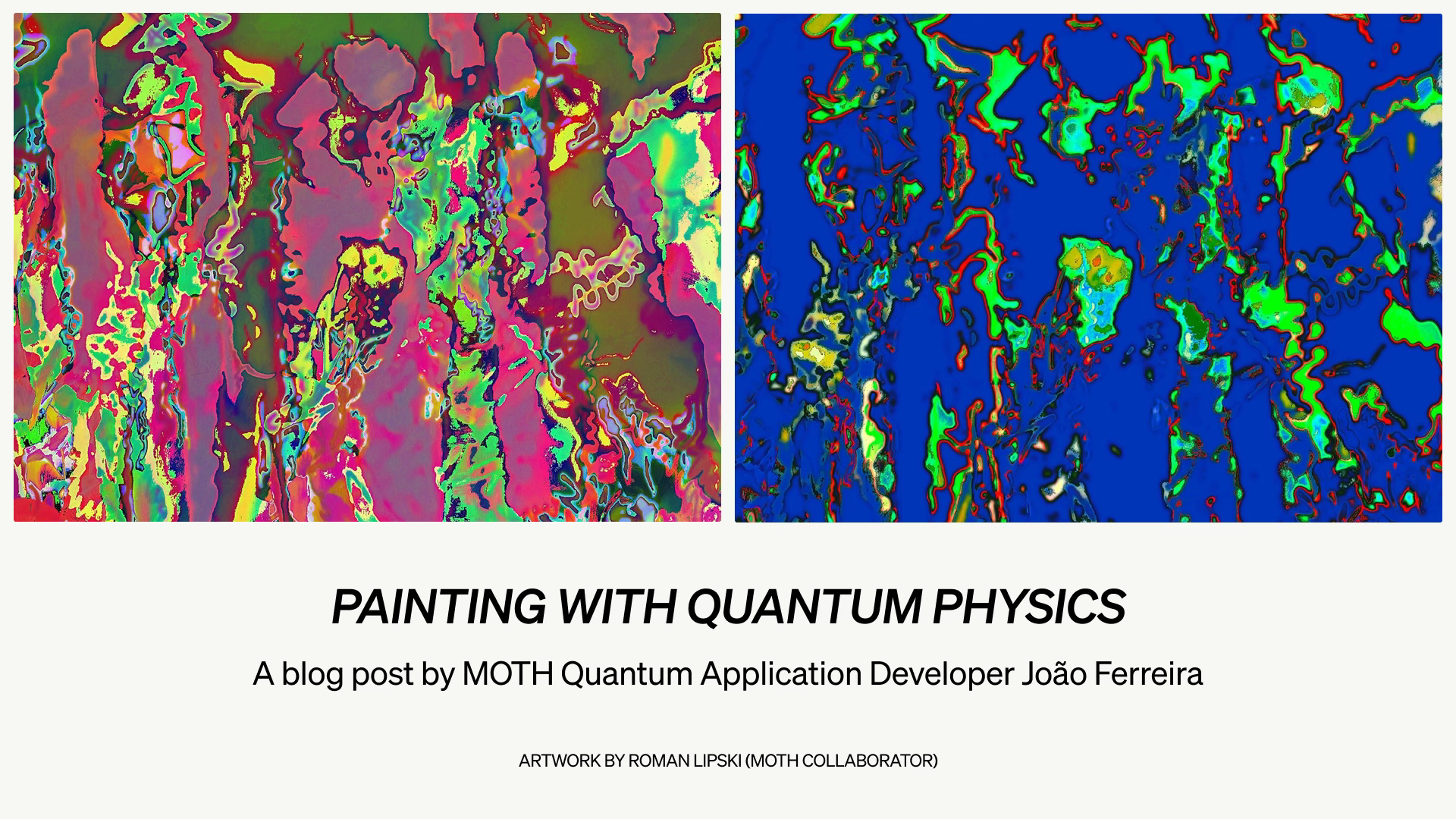
One of my earliest meetings at MOTH was one with James Wootton and the visual artist Roman Lipski. This was a recurring weekly meeting that has now been going on for half a decade, predating and foreshadowing the existence of MOTH. Roman is a renowned painter and one of the earliest explorers of Quantum Blur as an artistic tool. At the time, he had been experimenting with Quantum Blur for years, but he was looking for something more: a “quantum muse”. Not just a tool that could modify finished artworks, but one that could inspire his artistic process in genuinely non-classical ways.
It was clear from the start that such a tool needed to be easy to use, even familiar, so it could blend seamlessly with Roman’s workflow as a painter. The brush emerged as the natural choice… a quantum brush.
The goal was simple to state but tricky to achieve: create a digital brush that manipulates the canvas in a quantum way, making some of the unique features of quantum physics visible. We wanted the tool to feel natural for any painter. That meant avoiding exotic, unintuitive effects like reshaping compositions or distorting geometry. A brushstroke should still feel local, i.e. the artist paints in one region, and the effect appears in that region. This left color as the main channel for quantum dynamics.
One additional constraint was non-negotiable: the brushes had to run on today’s quantum hardware, without error correction. At MOTH, we believe quantum computers can already bring value to artists, so designing brushes that only work in a fault-tolerant future would defeat the purpose.
To tackle this challenge, we teamed up with Arianna Crippa and Karl Jansen from DESY, who pioneered Quantum Paint, another quantum-based visual effect for paintings. The result of this collaboration is a set of four distinct brushes, described in detail in our latest paper.
You might expect each brush to have been designed with a specific visual outcome in mind. But as physicists, our starting point was different: each brush was built to highlight a particular quantum phenomenon. The aesthetics came later and to our surprise, each brush turned out to resonate naturally with well-known painting styles!
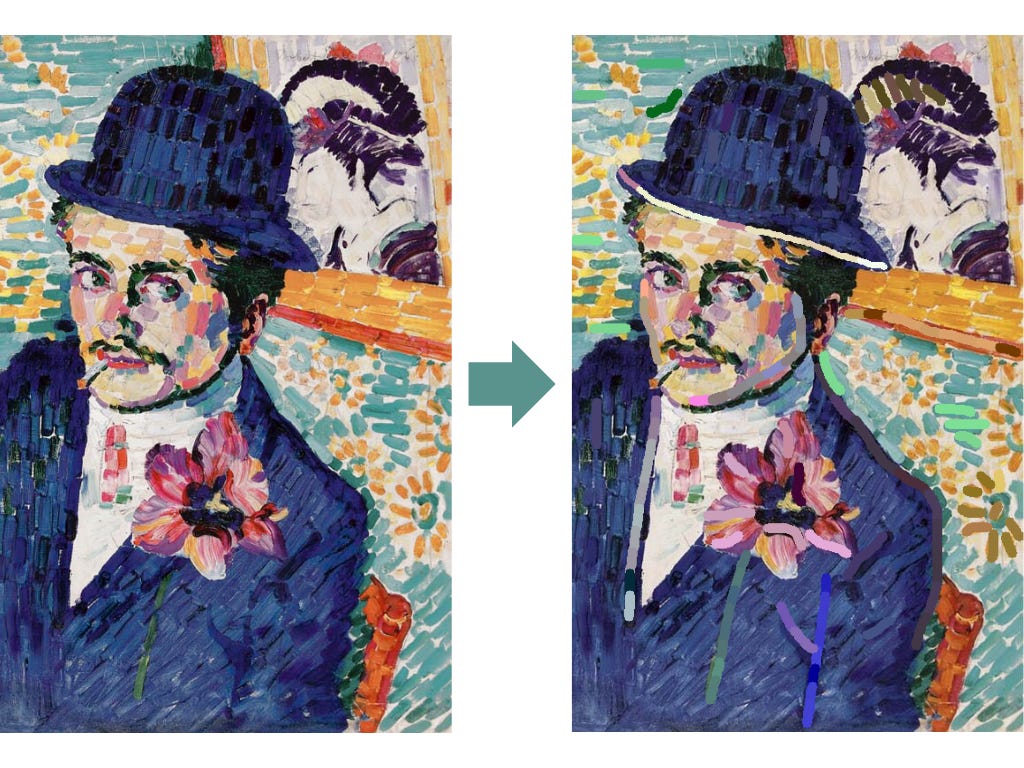
The Heisenbrush simulates the time evolution of magnetization in the Heisenberg Hamiltonian. The resulting strokes shift colors smoothly in a way that recalls the vivid palettes of Fauvism.
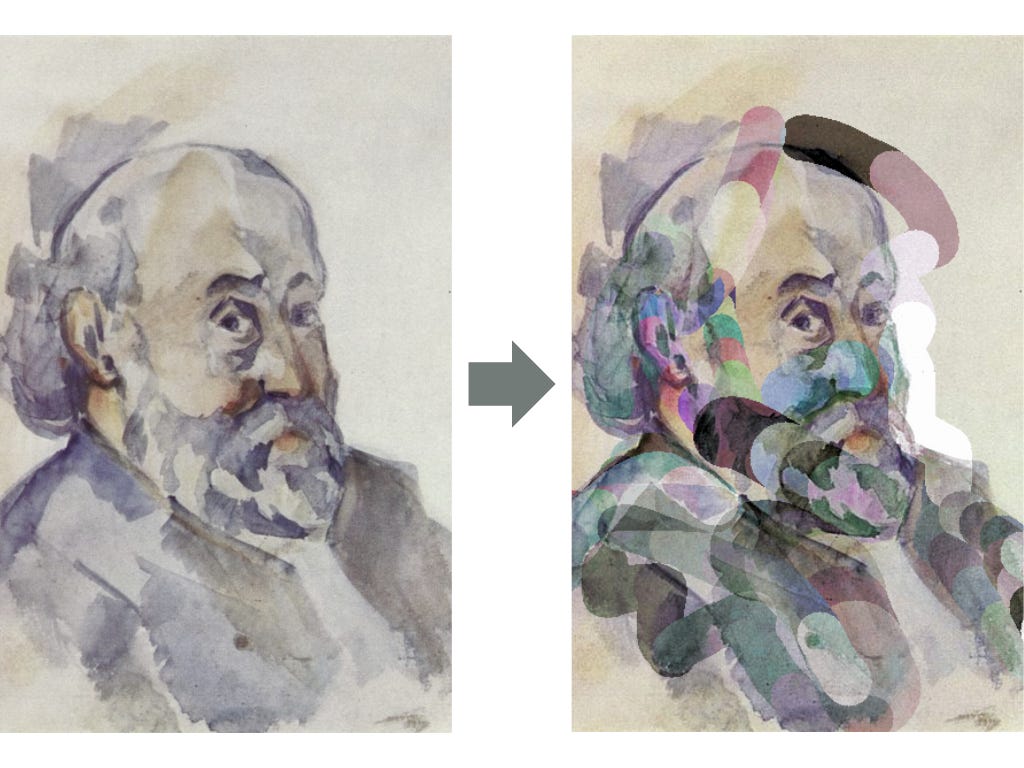
The Aquarela brush was inspired by system-reservoir interactions. On the canvas, this manifests as delicate color degradés that fade between brush and background, perfect for watercolor-like effects.
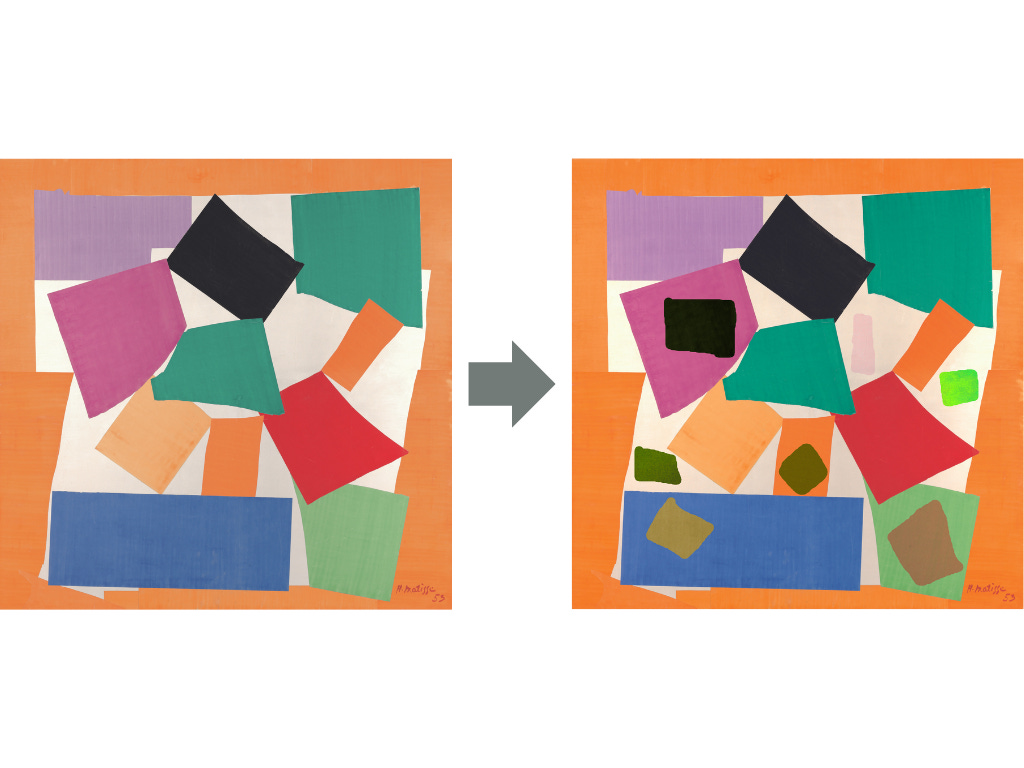
The Smudge brush is based on amplitude damping channels, where quantum information is gradually transferred to an ancilla. On the canvas, this becomes a new kind of color blending that Henri Matisse himself might have loved during his explorations of pure color.
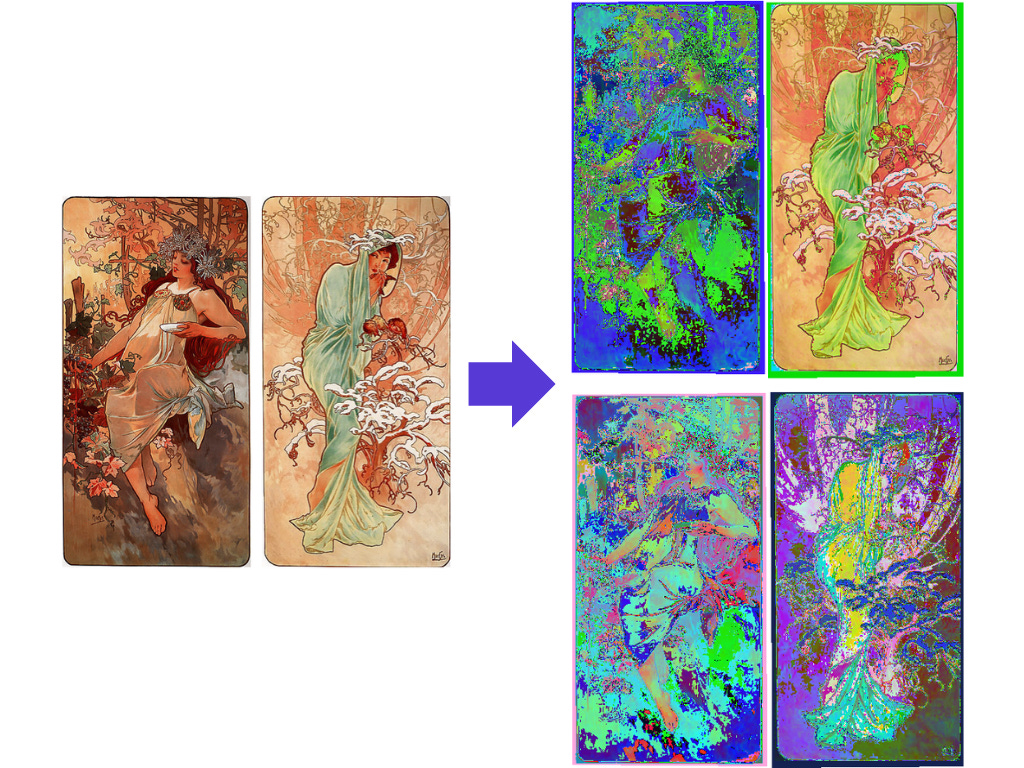
The Collage brush directly visualizes the no-cloning theorem. By attempting to clone entire regions using an asymmetric quantum cloning protocol, it produces outcomes that echo the serial art motifs of the 1970s. For our demonstration, instead of soup cans we used Les Saisons
All of these works were executed on IQM’s Sirius device, without any error mitigation. We embrace errors as part of the NISQ aesthetic, a feature of today’s quantum hardware that we may even come to miss once fault-tolerant machines arrive.
If you’d like to try the brushes yourself, my colleague Astryd Park has created a standalone app that you can download and use to start painting with quantum brushes today.
The project is fully open source, and we hope it inspires others to design and contribute their own brushes.